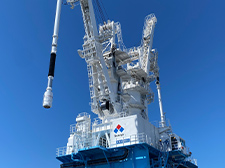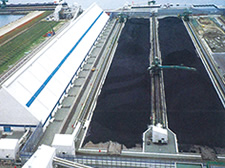


Jib Climbing Cranes [JCC]
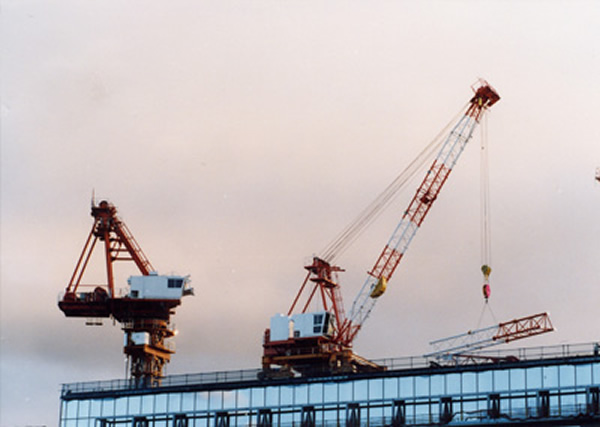
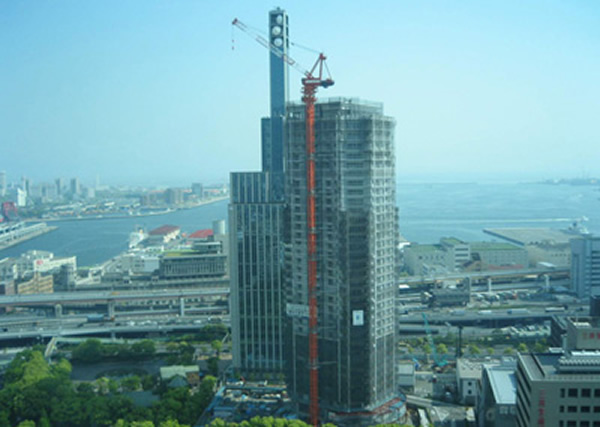
With the crane itself rising and descending, the jib climbing crane has revolutionized construction sites.
We support construction sites as a pioneer in jib climbing cranes.
![Jib Climbing Cranes [JCC]](/images/products/JCC_top.jpg)
Jib Climbing Cranes [JCC]
Overview
Our jib climbing cranes have gained the top market share in skyscraper construction.
This is the result of the high evaluations we have received as a partner for building construction, including our rapid response to construction industry needs and extensive after-sales services.
Features
Our jib climbing cranes use all-inverter control, and are 21st century cranes that can support a wide range of modern construction methods and shorter construction periods.
The use of centralized instruments (LCD touch panel displays), backup circuits (emergency selector circuits), and collision prevention function (three dimensions) provide large improvements to the work environment.
![Jib Climbing Cranes [JCC]](/images/products/JCC_intro_01.jpg)
Structure of jib climbing cranes
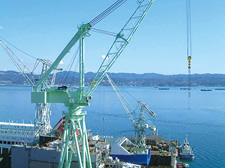
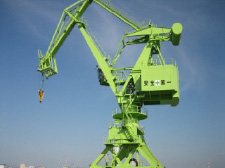
Ordinary building construction cranes are known as “tower cranes” due to their shape.
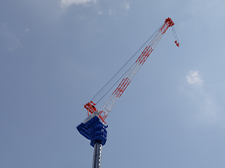
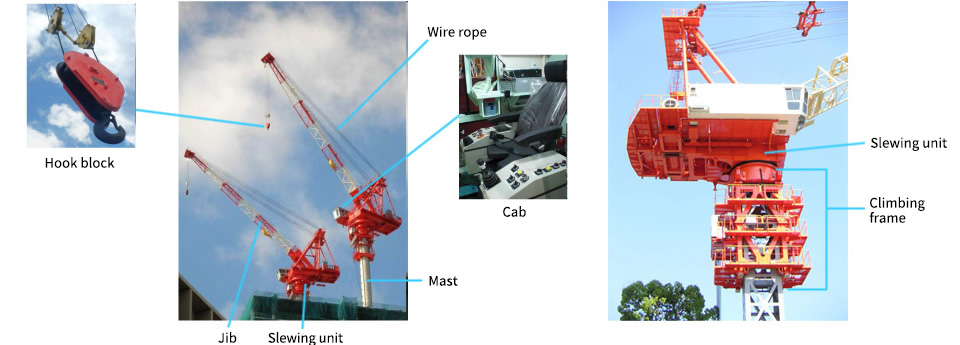
We refer to them as “jib climbing cranes (JCC).” They are cranes that have a jib (arm) and climb a mast on top of a building.
Here we will introduce the parts of a tower crane.
When a jib climbing crane rises
Floor climbing
As the floors of the building move higher, the tower crane uses a mast to rise a little at a time.
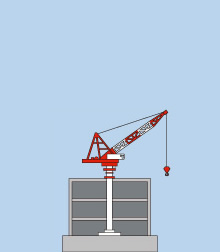
1. The tower crane is assembled, and constructs multiple stories of the building.
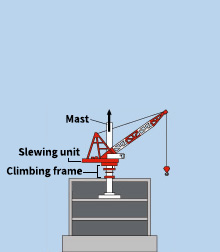
2. The body is anchored on the top floor, and the hydraulic cylinders on the body pull the mast upwards.
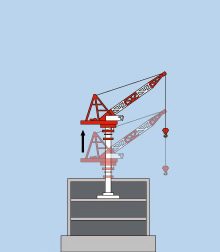
3. The bottom of the mast is anchored to the top floor, and now the body climbs up the mast.
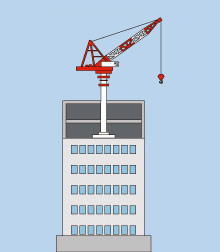
4. By repeating this several times like an inchworm, the crane climbs up the building. This is known as “floor climbing.”
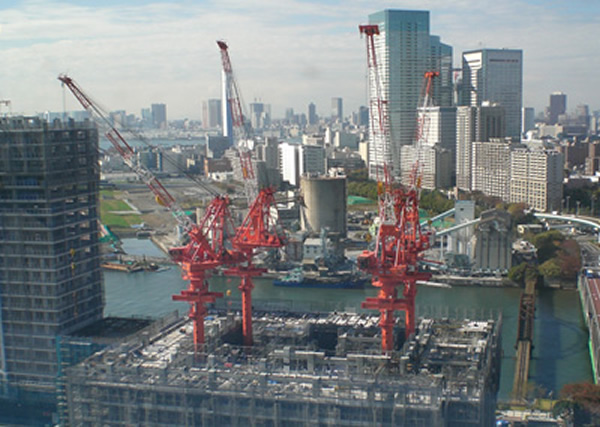
Mast climbing in which the crane adds to the mast and climbs in increments
Mast climbing
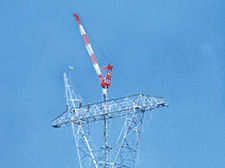
When constructing an apartment building, there is also a method of installing a tower crane next to the building.
This method requires a mast that matches the height of the building. This is known as “mast climbing.”
When a tower crane lowers
When multiple cranes are installed, each of the neighboring cranes is dismantled in sequence.
When only one is left, it is disassembled manually and lowered to the ground by elevator.
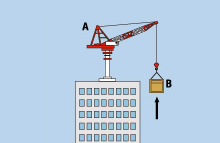
1. Crane A hoists the components of Crane B, which is half its size.
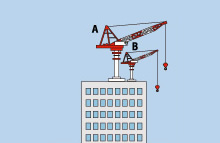
2. The components of Crane B are assembled.
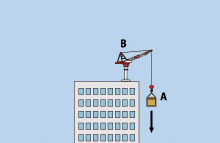
3. Crane B dismantles Crane A and lowers it to the ground.
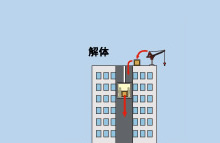
4. Steps 1 - 3 are repeated, until gradually only smaller cranes remain.
The last crane is disassembled by hand, and lowered to the ground by elevator.